
Generative AI vs Agentic AI vs Autonomous AI: Understanding the Key Differences
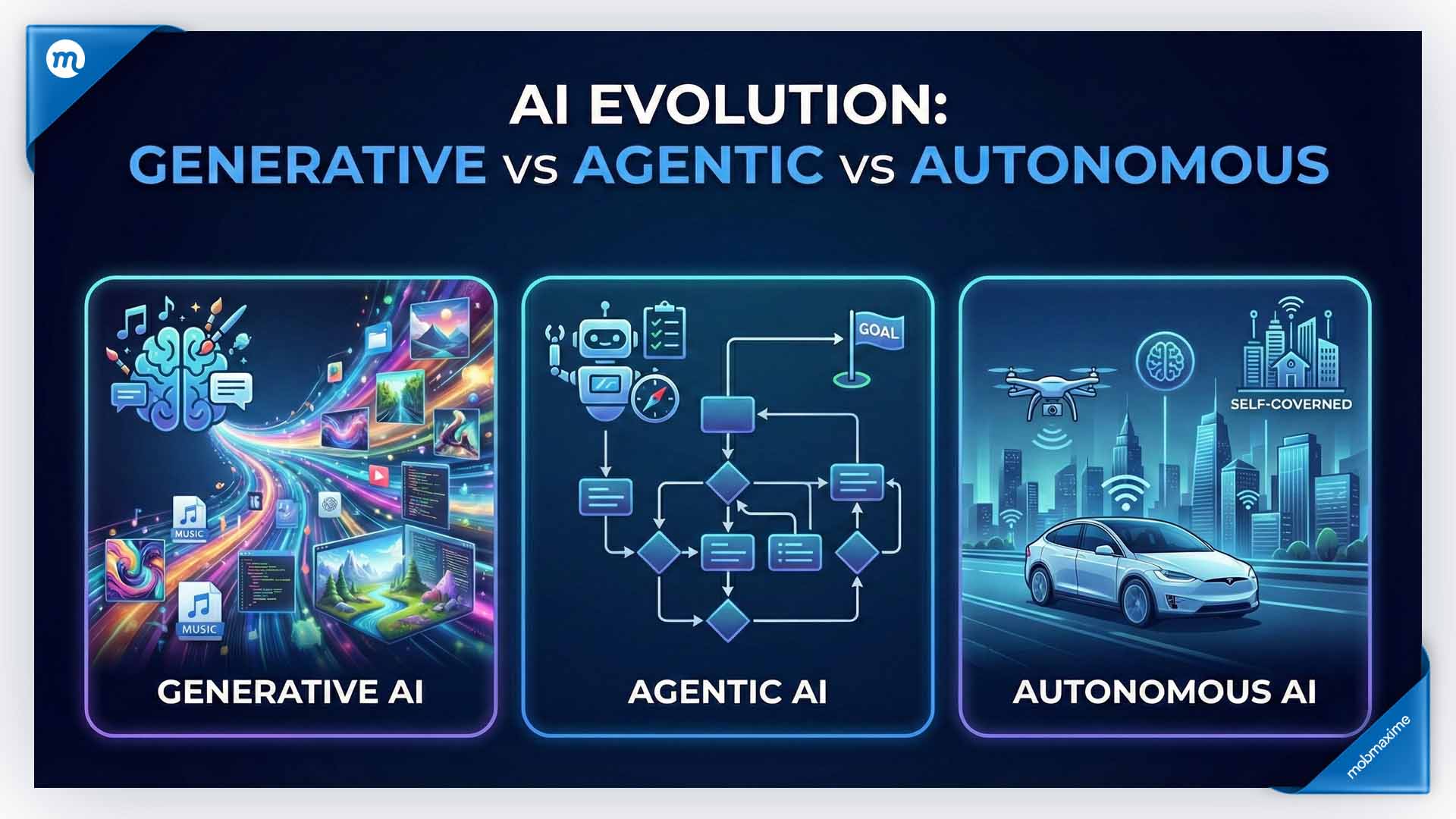
Artificial Intelligence is no longer a single concept. As AI systems become more advanced, new categories have emerged that define how AI thinks, acts, and operates. Among them, three terms are shaping the future of technology and business:
Generative AI, Agentic AI, and Autonomous AI
Although they are often grouped together, these technologies serve very different purposes. Understanding the difference between generative AI, agentic AI, and autonomous AI is essential for anyone working in technology, marketing, automation, or digital transformation.
This article explains each type clearly, compares their capabilities, and shows when and where each one should be used.
What is Generative AI?
Generative AI is designed to create new content based on patterns learned from existing data. It does not think independently or take actions on its own. Instead, it responds to user inputs and produces outputs such as text, images, videos, or code.
Popular generative AI tools have made content creation faster and more accessible, but their intelligence remains reactive, not proactive.
Key Characteristics of Generative AI
-
Works only when prompted
-
Produces text, images, audio, or code
-
Does not make decisions
-
Cannot execute tasks independently
Generative AI Use Cases
-
Blog writing and SEO content creation
-
Social media captions and ad copy
-
Image and video generation
-
Code assistance
-
Email drafting and summaries
Generative AI is powerful, but it cannot plan or act. This limitation led to the development of more advanced systems.
What is Agentic AI?
Agentic AI introduces the concept of agency. Instead of only generating outputs, agentic AI systems can understand goals, plan steps, and take actions to complete tasks.
This is why agentic AI is often described as a digital agent or AI worker.
Agentic AI Meaning in Simple Terms
Agentic AI systems:
-
Accept objectives instead of single prompts
-
Decide what steps are needed
-
Use tools, APIs, and generative models
-
Adjust actions based on results
Real-World Examples of Agentic AI
-
AI agents managing paid ad campaigns
-
AI copilots handling scheduling and follow-ups
-
Agent-based AI systems in customer support
-
Multi-agent AI systems collaborating on projects
Agentic AI relies heavily on decision-making AI and often includes human-in-the-loop AI, where humans supervise or approve actions.
What is Autonomous AI?
Autonomous AI represents the highest level of AI capability. These systems can operate independently, learn from their environment, and make real-time decisions without continuous human input.
Autonomous AI Explained
Autonomous AI systems:
-
Continuously observe and learn
-
Make independent decisions
-
Act without prompts
-
Adapt to changing conditions
Autonomous AI Examples
-
Self-driving vehicles
-
Autonomous drones
-
Robotics in smart factories
-
Algorithmic trading platforms
-
AI-powered logistics systems
Autonomous AI vs Traditional AI
Traditional AI follows predefined rules and requires human control. Autonomous AI, on the other hand, functions as a self-directed AI system capable of learning and adapting over time.
Generative AI vs Agentic AI vs Autonomous AI
Understanding the difference between generative AI and agentic AI and autonomous AI comes down to action and independence.
| Capability | Generative AI | Agentic AI | Autonomous AI |
|---|---|---|---|
| Content creation | Yes | Yes | Limited |
| Decision-making | No | Partial | Full |
| Goal execution | No | Yes | Yes |
| Human dependency | High | Medium | Low |
| Adaptability | Low | Medium | High |
Each type of AI builds on the previous one, forming a clear AI evolution path.
Generative AI vs Agent-Based AI with Examples
A common comparison is generative AI vs agent-based AI.
Example:
-
Generative AI writes a marketing email.
-
Agent-based AI writes the email, sends it, tracks engagement, and schedules follow-ups automatically.
Agent-based AI systems use generative models as tools, but their real power lies in planning and execution.
Is Agentic AI fully Autonomous?
No.
This is a critical distinction.
Agentic AI operates within defined goals and boundaries. It can decide how to complete tasks, but it still relies on human oversight, rules, or approvals. That’s why many businesses prefer agentic AI for automation rather than full autonomy.
When to use Generative AI vs Autonomous AI
Choosing the right AI depends on the problem you’re solving.
Use Generative AI When:
-
You need fast content creation
-
Creativity is required
-
Human review is essential
Use Agentic AI When:
-
Tasks involve multiple steps
-
Workflow automation is needed
-
Decisions require monitoring
Use Autonomous AI When:
-
Real-time response is critical
-
Systems must operate continuously
-
Minimal human intervention is required
Understanding when to use generative AI vs autonomous AI helps businesses avoid overengineering or underutilizing AI solutions.
From Generative AI to Autonomous AI: How AI Is Evolving
The journey from generative AI to autonomous AI reflects how intelligence is moving from creation to action to independence.
-
Generative AI focuses on producing outputs
-
Agentic AI focuses on completing objectives
-
Autonomous AI focuses on operating independently
This evolution is driving the rise of AI agents, autonomous agents, and AI orchestration platforms across industries.
The Future of Artificial Intelligence
The future is not about choosing one type of AI over another. It’s about combining them strategically.
-
Generative AI supports creativity and communication
-
Agentic AI drives efficiency and automation
-
Autonomous AI enables scale and real-time intelligence
As AI moves beyond basic tools and into decision-making systems, understanding these differences becomes essential for building effective AI strategies.
Must Read: AI Development Pricing Guide: What Companies Need to Know
Final Thoughts
Generative AI, agentic AI, and autonomous AI are not competing technologies. They represent different levels of intelligence and autonomy, each suited for specific use cases.
By understanding how they differ and how they work together, businesses and professionals can make smarter decisions, reduce risk, and stay ahead in the rapidly evolving AI landscape.
What’s Next?
Artificial intelligence is moving fast—from generative tools to agentic systems and fully autonomous AI. Understanding these differences is only the first step.
If you’re exploring how AI can support your business, improve automation, or enhance decision-making, the right strategy matters more than the tools themselves.
Stay ahead of the AI curve by:
-
Subscribing to our updates for practical AI insights
-
Exploring more articles on AI automation and AI agents
-
Reaching out if you want guidance on applying AI to real-world business challenges
The future of artificial intelligence belongs to those who understand how to use it effectively—not just those who follow the trends.

Join 10,000 subscribers!
Join Our subscriber’s list and trends, especially on mobile apps development.I hereby agree to receive newsletters from Mobmaxime and acknowledge company's Privacy Policy.